Registration

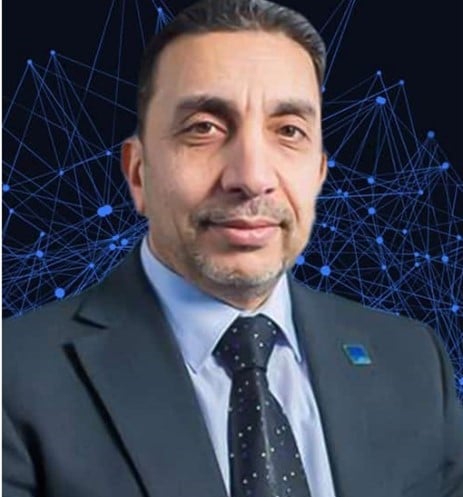
Prof. Dhiya Al-Jumeily
Liverpool John Moores University
Dhiya Al-Jumeily is a professor of artificial intelligence (AI) at Liverpool John Moores University with 30+ experience in the field of AI and its applications in fulfilling the United Nations Sustainable Development Goals (UNSDGs). DA’s research is focused on using AI alongside technological tools for improving the world and making it a better place for everyone everywhere. This has been featured in the advancement he has made in the field of healthcare, environment, safety and security, and education at a global level. Though based in the UK, DA has been collaborating with researchers from 20+ countries with a special focus on improving the situation in developing countries e.g. the MENA region. With roots based in Iraq, DA has embraced the knowledge he had gained in childhood that served as the basis of AI knowledge; where, algorithms were first invented at the House of Wisdom in Baghdad. DA has excelled in the field of AI and machine learning where he has published so far 500+ publications including peer reviewed articles, book/ book chapters, conference proceedings, and technical reports. Yet the benefits to the scientific audience were not limited to publications; but encompassed global scholarly activities through facilitating the exchange of knowledge among scientists, practitioners and regulatory organizations.
Thus, DA is the founder and president of the eSystem Engineering Society (eSES), a non-profit organization which mission comprises the development and advancement of technology for the benefits of humans. Since 2007, eSES hosts the IEEE International Conference on Developments in eSystems Engineering (DeSE) that is attended by 200+ attendees from 25+ countries. DeSE has led to multiple collaborations and opportunities related to AI and smart applications for the benefits of the people. DA is a research leader and has supervised 25+ PhD students and mentored 20+ academics during his careers. DA’s mentees have successful careers not only in academia but also in different industries and regulatory organizations focusing on real-world applications of AI. Example of these applications include intelligent environmental sensors that monitor air and water quality for pollutants. Other applications include intelligent healthcare applications that enable intelligent diagnosis-, patient’s management-, intervention-based applications that are used in Europe and the Middle East. DA’s research has been acknowledged and funded by key international funding bodies that contributed to £7.5m+ worth of projects via academic, industrial and knowledge transfer routes. DA’s work has been awarded in the UK and internationally. On the 31st of December 2020, professor Dhiya Al-Jumeily was promoted and appointed by THE QUEEN to the Most Excellent Order of the British Empire, “OBE- Officers of the Civil Division of the said Most Excellent Order for the “Services to Scientific Research”- https://www.thegazette.co.uk/notice/3703557. Moreover in 2022, DA has been classified as one of the top 30 most influential Arabs in technology and AI: https://technologyreview.ae/ai-person/.DA is focused on building on these achievements and taking them forward to making the world a better place. After all, success itself is a journey and not a destination. His future work is focused not only on advancing AI and its applications; but also, in ensuring that it is applied ethically and equitably such that it benefits everyone everywhere.
Presentation
Safeguarding Artificial Intelligence by Implementing Authenticity, Safety and Security of Big Data Analytics
Industry 4.0 has featured many advances relating to artificial intelligence (AI) that has been imposed in all our daily activities via Smart phones, online banking, and the interconnected world (IoT). AI offers many benefits particularly in the healthcare field and in society that has been seen via intelligent diagnosis, intelligent interventional apps, and robot carers. However, all these advantages do not come without penalties that are often hidden. Most AI-based services utilise big datasets to learn from, and that could breach individuals’ privacy, contain insufficient information, or even misinformation. The UK National Cyber Security Centre (NCSC) CEO has highlighted the importance of developing AI with security in its heart to avoid vulnerabilities in future AI systems1. Security of AI is an umbrella term that underlies protecting AI systems from malicious behaviour and protecting the public from AI malicious attacks. Malicious behaviour could not only be related to machine learning algorithms but also can occur at data collection and/or data reporting stages. Hence, un-inclusive and biased datasets could indirectly result in biased predictions because of insufficient training of machine learning algorithms. Moreover, inaccurate reporting could result in misunderstanding and thereby misinterpretation of findings. Equally using wrong algorithms or exploitation of algorithms could lead to inaccurate predictions that have adversative impact on the public and the environment. This presentation will shed the light on AI security throughout its lifecycle from data collection to final data reporting. It discusses in detail accidental and purposive AI threats relating to data quality, data breaches, social engineering, adversial attacks, algorithms misuse, and inaccurate reporting. The discussion will be supported by proposions to warrant AI security via a combined approach that has data collection tools, strong regulations, training sessions and guidelines.

Prof. Ali Selamat
International Institute of Technology (MJIIT), (Universiti Teknologi Malaysia).
Dr. Ali Selamat is an academician at Malaysia Japan International Institute of Technology (MJIIT), Universiti Teknologi Malaysia (UTM), Kuala Lumpur, Malaysia. An academic institution established under the cooperation of JICA (Japanese International Cooperation Agency) and Ministry of Higher Education Malaysia (MOHE) to provide Japanese-oriented engineering education in Malaysia (http://mjiit.utm.my/). Currently he is serving as the Dean for the institute. He is also current a chair of IEEE Computer Society, Malaysia Section. rof. Ali was the Chief Information Officer (CIO) and Director of ICT, Universiti Teknologi Malaysia. He was the Dean of Research Alliance in Knowledge Economy (K-Economy RA) UTM which is currently renamed as Smart Digital Community Research Alliance, UTM. He is currently a professor in Software Engineering at Faculty of Computing, UTM.
Previously he was an IT Manager at School of Graduate Studies (SPS), UTM. He is also was a head of Software Engineering Research Group (SERG), K-Economy Research Alliance, UTM. He is also the editorial board of Knowledge-Based Systems Journal Elsevier, International Journal of Information and Database Systems (IJIDS), Inderscience Publications, Vietnam Journal of Computer Science, World Scientific Publications, Service Oriented Computing, Springer Verlag and PSU Research Review: An International Journal, published by Emerlad Publications. His research interests include cloud computing, software security, software engineering, software agents, web engineering, information retrievals, pattern recognition, genetic algorithms, neural networks and soft-computing. He received a Diploma in Computer Science, Universiti Teknologi Malaysia (UTM), B.Sc. (Hons.) in IT from Teesside University, United Kingdom and M.Sc. in Distributed Multimedia Interactive Systems from Lancaster University, United Kingdom. He received Japanese Language Certificate from Osaka University of Foreign Studies which is currently is part of Osaka University, Japan. He has received a Dr. Eng. degree from Osaka Prefecture University, Japan. Prof. Ali Selamat is currently a visiting Professor at Hradec Kralove University, Czech Republic, Kagioshima Institute of Technology, Japan. He was a visiting Professor at Kuwait University, Japan Universities, Universitas Islam Sultan Agung (UNISULA) Indonesia, and keynote speaker in many international conferences.

Prof. Dr. Sultan Abu Orabi
Higher Education and Scientific Research in the Arab World, Sultan T. Abu-Orabi, Tishk International University, Erbil- Kurdistan- Iraq
Professor Abu- Orabi graduated from University of Jordan in 1973. In 1977 obtained master degree in organic chemistry from
western Michigan University (USA). In 1982 obtained Ph.D. degree from the University of Michigan – Ann Arbor (USA).
In July 1982, started his career at Yarmouk University (Jordan) as assistant professor. Dr. Abu- Orabi was visiting
professor at Bahrain University between 1989-1990. Then appointed at King fahd University of petroleum and Minerals
(Saudi Arabia) from 1990-1993 & 1996-1998. In 2001, Dr. Abu-Orabi was appointed as Dean of students Affairs at Yarmouk
University. In September 2002 Dr. Abu-Orabi was appointed as president of Irbid University (Jordan). In March 2005,
was appointed as founder and president of Tafila Techical University. In March 2009 was appointed as president of
Yarmouk University (the second Largest University in Jordan). In July 2011, Abu –Orabi was elected as the secretary
general of the Association of Arab universities until July 2018. Currently, Prof. Abu-Orabi is the President of Tishk
International University (Erbil-Iraq). He also was President of the Jordanian Chemical Society and President of the
Arab Union of Chemists.
Dr. Abu Orabi is an Editor-in-chief of many international journals, and is a member of many editorial boards.
He is also Member of Board of Trustees of several local and international universities.
He Participated in over 250 conferences at the national, regional and international levels;
Organized over 20 national and international conferences in Jordan and Arab Countries and Served on many
International Advisory Boards. He also acted as Chair or member of the Scientific and Organization Committees
of several national and international scientific meetings.He was awarded Shoman Prize for Young
Scientists – Jordan, in 1988; Alexander Von Humboldt fellowship, Germany 1989, 2013 and 2018; "Badge of Honor Medal"
presented by the International Scientific Partnership Foundation, Russia, for the Development of Science in Jordan and
Arab countries and International Collaboration, 2007; "Jewels of the Muslim World" Award for 'Top Movers of the
Islamic Economics’, Kuala Lumpur, Malaysia, presented during the 2nd Muslim World Biz Conference. June 2011 was
granted Fellow of the Royal Society of Chemistry, UK 2011, and recently was awarded Honorary Fellowship from Cardiff
Metropolitan University (UK) 2017. In 2018, Dr. Abu -Orabi was granted three more honorary doctorate degrees from
Bolograd University (Russia), Management and Science University (Malysia) and from International Islamic University
of Malaysia.
He published over 115 papers throughout his career spanning more than forty years. Supervised and
served on examining dissertations for more than Eighty M.Sc and Ph.D students in Jordan, Arab World, India and Europe.
Higher learning is deeply rooted in the history and societies of the Arab Middle East. After the seventh century and the islamization of the Arab world, local religious schools known as madrasa became the main institutions of higher learning in the Middle East.Madrasas like Al Zaytounah (Tunisia, 734 AD), the Qarawiyyun in Fez (Morroco 859AD), al-Azhar in Cairo (Egypt, 970AD) and Al Mustansiryah in Iraq (984 AD) and several universities were established in the Andulus area during the ninth and tenth centuries. Those universities are argued to be the first universities in the world ever established (even before the first European University – Bologna University 988AD) and most of them were funded by the Islamic Waqf (Endowment).
During the same period, other institutions of the Arab world such as hospitals, libraries, observatories, and private homes known as “academies” undertook the development of the nonreligious sciences, inspired by the ancient Greeks. The most famous of these academies was the Beit al Hikma (House of Wisdom) in Baghdad, where numerous fields within the sciences (astronomy, physics, mathematics, medicine, chemistry, geography) flourished until the sixteenth century.
In the modern history, Higher education in Arab countries is considered recent. In the past decades, most Arab students used to study mainly at few Arab universities spread in the Arab World in addition to universities in Turkey, Pakistan, India, Europe, Russia and USA. Until 1953, only 14 public and private universities were established in the Arab World.
During the last Thirty years, private universities increased rapidly in the Arab World and absorbed around 30% of students enrolled in Higher Education. At present, there are more than 800 private universities in the Arab World. This represents 40% of the total number of Arab universities. At present, there are more than 2000 Universities in the Arab World. Now, the Arab Universities, facing many challenges such as the quality of the education and the weakness of Outputs of Scientific Research and Brain Drainage, which will be emphasized in the Lecture

Prof. Isam Zabalawi
Unleashing the Transformative Power of AI in Engineering Education
Professor Isam Zabalawi is the President of the Australian University (AU). With a PhD in Electrical & Electronics Engineering from Leeds University, he is specialized in analog and digital signal processing and communication techniques. His interests include the communication industry, information technology, technology transfer and higher education development and reform. Professor Zabalawi is a well-published research scholar and prior to joining AU in 2017, held senior positions including President of The Arab Academy for Banking & Financial Sciences, Minister of Higher Education and Scientific Research in Jordan, Chancellor of the University of Sharjah (UAE), Chairman of the Higher Education Accreditation Council of Jordan, founding minister for establishing the German-Jordanian University and founding President of the International University for Science and Technology (IUST) in Syria 2005-2007. He is a Fellow of Engineers Australia and awarded the Engineering Executive credentials. Additionally, he is a fellow of The Institution of Engineering and Technology (IET) - United Kingdom and he is a fellow with the European Federation of National Engineering Associations (FEANI). He served as a Higher Education Reform Expert (HERE’s) with the European Commission and Erasmus+ (Tempus) Office, Jordan.
Extended Summary:
Artificial Intelligence (AI) stands at the forefront of technological innovation, revolutionizing industries, economies, and societies worldwide. At its core, AI entails the development of intelligent systems capable of emulating human cognitive functions such as learning, reasoning, and problem-solving. In the realm of engineering education, AI holds vast promise for reshaping the learning landscape, transforming how students engage, collaborate, and innovate.
This contribution delves into the multifaceted impact of AI adoption in engineering education, encompassing curriculum enhancement, personalized learning, fostering innovation, industry alignment, research integration, quality assurance, professional development, societal engagement, job creation, and interdisciplinary collaboration.
Harnessing the Transformative Potential:
The integration of AI into engineering education is poised to revolutionize various facets of academic life, from curriculum development to pedagogy, research integration, and professional readiness. By embracing AI-powered education, engineering programs of study can pave the way for a future where students are adept at navigating complex AI technologies and contributing meaningfully to their fields.
Empowering Curriculum Development: AI affords universities the opportunity to craft innovative curricula that resonate with the evolving needs of the engineering profession. By incorporating AI-related disciplines such as machine learning, data science, and robotics into their programs, educational institutions ensure that graduates are equipped with the requisite skills and knowledge to excel in AI-driven industries. Moreover, AI-powered analytics enable educators to discern emerging trends and industry demands, facilitating the customization of curricula to align with workforce requirements and societal needs.
Revolutionizing Pedagogy and Student Engagement: AI heralds a paradigm shift in pedagogical approaches, offering personalized learning experiences tailored to individual student needs and preferences. Adaptive learning platforms fueled by AI algorithms analyze student performance data to deliver customized instruction, assessments, and feedback, thereby enhancing student engagement, motivation, and mastery of concepts. Furthermore, AI-driven interactive learning environments and gamification techniques amplify student participation and experiential learning opportunities, fostering deeper understanding and retention of knowledge.
Catalyzing Innovation: The integration of AI into engineering education serves as a catalyst for fostering a culture of innovation and entrepreneurship among students. By exposing students to AI-driven problem-solving methodologies and tools, educators empower them to tackle complex challenges and devise creative solutions. Project-based learning initiatives, hackathons, and innovation challenges provide students with hands-on experience in applying AI techniques to real-world problems, nurturing their entrepreneurial spirit and instilling a passion for continuous improvement and innovation.
Bridging Education with the Profession: AI bridges the gap between academic education and professional practice by imparting practical skills and experiences aligned with industry demands. Internships, co-op programs, and industry partnerships afford students firsthand exposure to AI-related fields, enabling them to cultivate professional networks and gain insights into real-world applications of AI technologies. Additionally, AI-driven career development platforms facilitate seamless transitions from education to employment, connecting graduates with job opportunities commensurate with their skills and aspirations.
Integrating Research into the Classroom: AI facilitates the seamless integration of cutting-edge research into engineering education, enriching the learning experience and inspiring students to pursue research careers. By incorporating research-oriented projects, seminars, and collaborations with faculty researchers, students gain exposure to the latest advancements in AI and contribute to ongoing research endeavors. This research-driven approach fosters critical thinking, problem-solving skills, and prepares students for graduate studies and research-intensive careers in AI.
Ensuring Quality Assurance and Assessment: AI enhances quality assurance and assessment processes in engineering education by automating grading, delivering real-time feedback, and analyzing student performance data. Intelligent tutoring systems and assessment tools powered by AI algorithms enable educators to monitor student progress, identify learning gaps, and tailor instruction accordingly. This data-driven approach ensures that students receive timely support and interventions to succeed in their academic pursuits, thereby upholding academic standards and promoting student success.
Facilitating Professional Development: AI supports the professional development of educators by providing access to AI-powered teaching tools, resources, and training programs. Faculty development initiatives focus on integrating AI technologies into teaching practices, designing AI-enhanced curricula, and fostering a culture of innovation and lifelong learning. By equipping educators with the skills and knowledge needed to leverage AI effectively, institutions ensure the delivery of high-quality education that meets the evolving needs of students and the engineering profession.
Engaging in Community Services and Societal Impact: AI-driven community service projects and outreach initiatives empower engineering students to apply their skills and knowledge to address pressing societal challenges. Collaborative projects with local communities, non-profit organizations, and government agencies enable students to develop innovative solutions that tackle social, environmental, and economic issues. Through community engagement, students gain a deeper understanding of their role as engineers in serving society and effecting positive change.
Expanding Job Opportunities for Graduates: AI unlocks a plethora of job opportunities for engineering graduates across diverse industries, including technology, healthcare, finance, manufacturing, and transportation. Roles such as data scientists, AI engineers, robotics specialists, and machine learning researchers are in high demand, offering competitive salaries and avenues for career advancement. By equipping graduates with AI knowledge and skills, engineering education positions them for success in the AI-driven workforce, empowering them to assume leadership roles and shape the future of technology and society.
Promoting Interdisciplinary Engineering Education: AI fosters interdisciplinary collaboration by bridging academic disciplines and industries, paving the way for holistic engineering education. Interdisciplinary AI courses, research projects, and initiatives bring together students and faculty from diverse backgrounds to tackle complex challenges at the intersection of engineering, computer science, mathematics, and beyond. This interdisciplinary approach cultivates creativity, innovation, and collaboration, equipping students with the tools and perspectives needed to address multifaceted problems and drive positive change in society.
Consequently, nurturing the future of engineering education necessitates the integration of AI with strategic university initiatives. The proactive steps universities and colleges of engineering can take to facilitate this integration, ensuring that students are equipped with the skills, knowledge, and ethical awareness needed to excel in an AI-driven world. These steps include:
Establishment of AI Task Forces: Universities and colleges should establish dedicated AI task forces comprising faculty members, industry experts, and students to spearhead the integration of AI into engineering education. These task forces serve as catalysts for strategic planning, coordination of initiatives, and alignment with industry demands, fostering a collaborative ecosystem conducive to innovation and excellence in AI education.
Investment in Faculty Development: Institutions must invest in comprehensive faculty development programs focused on AI integration to empower educators to leverage AI technologies effectively, design AI-enhanced curricula, and foster interdisciplinary collaboration. Workshops, seminars, and training sessions ensure that faculty are equipped to deliver high-quality AI education that meets the evolving needs of students and the engineering profession.
Creation of AI Centers of Excellence: Universities should establish AI centers of excellence within their colleges of engineering to harness the full potential of AI in education and research. These centers serve as vibrant hubs for interdisciplinary collaboration, cutting-edge research, and knowledge dissemination in AI. By providing resources, infrastructure, and support for AI-related projects and initiatives, these centers catalyze innovation, drive industry partnerships, and enhance the institution's reputation as a leader in AI education and research.
Development of AI Curriculum Guidelines: Colleges of engineering should develop comprehensive AI curriculum guidelines and standards to ensure consistency and quality across AI-related courses and programs. These guidelines outline core competencies, learning outcomes, and recommended resources for AI education at different levels, guiding faculty in the design and delivery of AI curricula that prepare students for the complexities of the AI-driven workforce.
Integration of AI Across Disciplines: Universities should promote cross-disciplinary collaboration by integrating AI concepts and methodologies into courses and programs across various engineering disciplines. AI-related topics such as machine learning, data science, and robotics should be seamlessly woven into the fabric of engineering education, providing students with a holistic understanding of AI's applications and implications.
Enhancement of Infrastructure and Resources: Institutions must invest in infrastructure and resources tailored to the needs of AI practitioners to support AI education and research. Access to high-performance computing facilities, AI software tools, datasets, and hardware resources empowers students and faculty to engage in cutting-edge AI experimentation, development, and innovation, driving excellence in AI education and research.
Fostering Industry Partnerships: Universities should foster partnerships with industry stakeholders to provide students with hands-on AI experiences through internships, co-op programs, and collaborative projects. These partnerships inform curriculum development, provide insights into industry trends and practices, and offer students opportunities to apply AI knowledge and skills in real-world settings, enhancing their readiness for the AI-driven workforce.
Promotion of Ethical AI Education: Institutions should incorporate ethical considerations into AI education to prepare students to navigate the ethical complexities of AI development and deployment responsibly. Courses on AI ethics, responsible AI design, and societal impacts equip students with the knowledge and ethical awareness needed to make informed decisions in their professional practice, ensuring that AI advancements benefit society while minimizing potential harms.
Support for Student Innovation and Entrepreneurship: Universities should provide support for student-led initiatives through incubators, accelerators, and entrepreneurship programs to cultivate a culture of innovation and entrepreneurship in AI. These initiatives offer students resources, mentorship, and funding to develop AI-driven startups and innovative solutions to real-world problems, empowering them to become agents of change and innovation in the AI ecosystem.
Continuous Evaluation and Adaptation: Institutions must embrace a culture of continuous evaluation and adaptation to ensure the effectiveness and relevance of AI integration efforts. Regular assessment and feedback mechanisms enable institutions to identify areas for improvement, address emerging challenges, and make adjustments to AI education initiatives based on input from stakeholders, ensuring that AI education remains responsive, relevant, and aligned with industry trends and societal needs.
The integration of AI into engineering education represents a monumental opportunity to reshape the future of learning and professional development.
As we navigate the dawn of this new era in engineering education, it is imperative that universities and colleges embrace AI with strategic foresight and intentionality. The establishment of AI task forces, investment in faculty development, creation of AI centers of excellence, development of AI curriculum guidelines, integration of AI across disciplines, enhancement of infrastructure and resources, fostering of industry partnerships, promotion of ethical AI education, support for student innovation and entrepreneurship, and commitment to continuous evaluation and adaptation are all essential steps in realizing this vision.
In conclusion, the impact of AI extends across various dimensions, including curriculum development, pedagogy, student engagement, innovation, research integration, quality assurance, professional development, societal engagement, job opportunities, and interdisciplinary education. By harnessing AI technologies and methodologies, engineering education can evolve to meet the demands of the 21st century, equipping graduates to excel in a rapidly changing world. Through collaborative efforts between educators, industry partners, and policymakers, institutions can leverage the full potential of AI to shape the future of engineering education and empower students to make a positive impact on society and the world.
Prof. Dr. Adnan Al-anbuky
Electrical & Electronic Engineering Department
School of Engineering, Computer and Mathematical Sciences, Auckland University of Technology, Auckland, New Zealand
Professor Adnan Al-Anbuky directs AUT’s Sensor Network and Smart Environment (SeNSe) research laboratory. Smart environments require sensors, intelligence, communication, and actions. As the problem involvement and complexity varies, the involvements and execution or implementation platform for each of these actors takes different shape. Getting these components to working in harmony and on the appropriate physical or virtual platform is Professor Al-Anbuky’s area of expertise. Immediately after his electrical engineering degree at the University of Baghdad, he won a scholarship to do postgraduate studies in United Kingdom. He became interested in digital electronics together with control systems and was encouraged to enter the field of incremental motion control as applied to computer numerical control. In the early 70s these were key drivers of the emergence of industrial automation which was the subject of his master’s and doctoral degrees. Current progression of this area has led to today’s industrial IoT (IIoT) or Industry4.
This focus continued after graduation until he arrived to New Zealand in the mid-90s where he established an industrial research unit for DC power quality monitoring and management systems firm SWICHTEC Power Systems. The unit has gone on to deliver concepts for products, numerous patents (a portfolio of around 40 international filings), turned out intellectual property for products and “better still, experts” says Professor Al-Anbuky. Returning to academia at AUT in 2005, Professor Al-Anbuky utilised his industry experience to establish the School of Engineering’s SeNSe lab which every year attracts numerous researchers, projects, funds, and local and international connections. The SeNSe lab is involved with the development of various concepts relevant to smart environments through the focus area of wireless sensor actuator networks (WSAN). With the progress of technologies and introduction of cloud and edge computing, software defined networks, networks virtualization and re-orchestration, the research focus is extended to cover investigating the empowerment of limited resources physical networks through the cyber backup. This in effect covered the interrelation between the physical and virtual processes and support intelligent and adaptive solutions that dynamically re-orchestrate the actors in responding to events within the operational environment. Areas of Internet of Things and cyber physical intelligence becomes natural part of the lab research activities. The lab currently deal with investigating various system organization with focused used cases like human movements and precision health, vehicular networks and smart dynamic grouping, conservation monitoring and UAVs as data ferry and others.
Connectivity, Movement Monitoring, and Mobility Intelligence CM3I
The three interconnected concepts of connectivity, movement monitoring, and mobility intelligence plays significant role in various applicants including smart city, healthcare, transportation, and industrial operations. IoT offers modern representation of connectivity. It utilizes the various communication means and protocols including the Internet for communicating its data and events. The emergence of distributed IoT takes the approach further by involving communal connectivity and widen the space of coverage for meaningful monitoring. Good number of applications relies on movement monitoring. Data collection and analysis facilitate the means for intelligence. The main challenge here is how compatible these operations are to the need of the physical processes. Furthermore, how effective is their collaborative act in supporting the timely smart management of the physical processes. The utilizing of network and infrastructure virtualization, dynamic reorchestration, and edge computing requires intelligent interaction with ongoing events. The edge computing at both the wireless sensor-actuator edge as well as the access point edge, the reaction-time to process dynamics constrains, and fluidity of data flow over the various network components and in reaction to any network rupture are few of the key challenges that the mobility intelligence needs to take care of. This talk will discuss live examples extracted from AUT Sense lab on software defined wireless and mobile sensor network organizations and possible scenarios for smart mitigation of the challenges. Number of use cases such as vehicular grouping network, UAV-based spatial data collection, and Precision-health human relative movement tracking are discussed. Smart and timely interaction with the physical environment together with software definition should facilitate the fluency in network topological re-orchestration and hence smooth the path towards the data flow. This in effect facilitates the environment for intelligent interaction between the cyber and physical worlds.
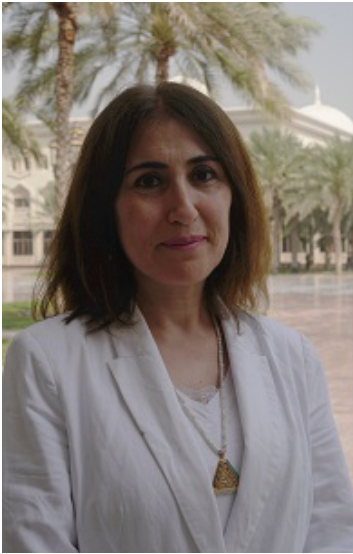
Prof. Dr. Abir Hussain
Data science and Industrial Applications
Abir Hussain is a professor of Image and Signal Processing at the Department of Electrical Engineering, University of Sharjah, UAE and IEEE senior member.She completed her PhD study at The University of Manchester (UMIST), UK in 2000 with a thesis title Polynomial Neural Networks for Image and Signal Processing. She works in the research areas of Neural Networks, Signal Prediction, and deep learning for industrial applications. Abir has published in number of high esteemed and high impact journals including IEEE Access, Pattern Recognition Letters, IEEE Internet of Things Magazine, Ad Hoc Networks, IEEE Transactions on Sustainable Computing, Expert Systems with Applications, PloS ONE, Electronic Letters, Neurocomputing, and Neural Networks and Applications. Abir has successfully supervised over 20 research students and has been an external examiner to various UK and overseas Universities for postgraduate research degrees. She is an editor for Elsevier Neural Networks, Elsevier Engineering Applications of Artificial Intelligence journal and Plos One.
Data Science represents a multidisciplinary field that involves using various techniques including pattern recognition, computer programmed algorithms and image analysis. knowledge can be gained through datasets gathered from various resource and with various sizes. Mobile phones, remote sensors, software logs and social media platforms can be used to gather large datasets with heterogeneous properties stored using unstructured format and complex relationships between values. Deep learning approaches can be used to extract knowledge and analysis large and complex datasets.

Prof. Dr. Ali Jafer Mahdi
Professor Dr. Ali Jafer Mahdi, Ph.D. in Electrical Engineering - Renewable Energy Systems and Power Electronics & Drives from the University of Liverpool, UK. He has been a visiting researcher at South China University of Technology. He is a member of the ICREPQ International Scientific. His research interest includes, but not limited to: wind turbine generators, solar PV systems, electrical machines and power electronics.
Soon

Prof. Dr. Carlo Trigona
Carlo Trigona presently serves as an Associate Professor of Electronic Instrumentation and Measurements at the University of Catania, Italy, within the Department of Electrical, Electronic, and Computer Engineering (DIEEI). His academic journey began with the attainment of an M.S. degree (cum Laude) in Automation Engineering and Control of Complex Systems from the University of Catania in 2006. Continuing his pursuit, he embarked on his Ph.D. studies at the same university from 2006 to 2009, culminating in the achievement of a Ph.D. degree in Electronic, Automation, and Control of Complex Systems in 2010. His post-doctoral endeavors took him across Europe. From 2010 to 2011, he served as a post-doc and lecturer at the University Montpellier II – LIRMM (France). Subsequently, he continued his post-doc and lecturer roles at DIEEI, University of Catania, from 2011 to 2017. In 2017 to 2018, he furthered his research as a post-doc at the Chemnitz University of Technology (Germany). Returning to the University of Catania, he served as an Assistant Professor of Electronic Instrumentation and Measurements at DIEEI from 2018 to 2020. Continuing his academic progression, he held the position of tenure-track Professor of Electronic Instrumentation and Measurements at the same department from 2020 to 2023. He actively engages in numerous national and international academic and engineering projects, contributing as both coordinator and partner. Additionally, he significantly impacts the Instrumentation and Measurement community through various activities, including editorial roles and serving as a reviewer for esteemed journals from 2006 up to the present. Professor Trigona has received several awards for his research endeavors, notably the 2020 IEEE I&M Outstanding Young Engineer Award for his exceptional contributions to advancing I&M concepts in sensors and transducers for energy harvesting. Regarding his research profile, Prof. Trigona's first paper surfaced in 1997, and presently, he co-authors more than 250 scientific publications with over 2200 citations. These contributions span chapters in books, papers in international journals, proceedings of international conferences, trademarks and patents. His research interests encompass sensors, transducers, MEMS, NEMS, fluxgate magnetometers, energy harvesting, as well as innovative areas such as green and biodegradable sensors and transducers based on living organisms.
Living Sensors: Pioneering Sustainable Solutions in the Evolution of Sensors and Transducers
The scientific community was urged to contribute to a transition from a grey economy to a green one. New technologies were emphasized to enhance human life quality while respecting the environment. Specifically, the focus was on developing a sustainable economy by creating greener electronics, sensors, and transducers—from selecting raw materials to technology used in production and characterization, to their environmental impact after their useful life. In this context, discussions included exploring soils, plants, and biological processes to propose a new generation of electronic devices. These devices aimed to surpass silicon-based solutions that contribute to environmental pollution through CO2 emissions during manufacturing and present challenges in non-biodegradability and toxicity at the end of life phase. The proposed solution aimed to produce devices without CO2 emissions during production, considering the absence of manufacturing and foundry processes. Additionally, it aimed to reduce the amount of carbon dioxide already present in the environment through the natural life and photosynthetic processes of these organisms. The talk also aimed to delve into the entire “More-Than-Green” system, paving the way for the possibility of creating a new class of devices, named Living Sensors®, intended to be simple, low-cost, non-toxic, biodegradable, environmentally friendly, and mimetic, applicable across various fields, including environmental and cultural heritage conservation, contributing significantly to the realization of a greener economy.
Prof. Dr. Grzegorz Litak
Piezoelectric vibration energy harvesting with a nonlinear energy sink
Head of Automation Department, Lublin University of Technology, 20-618 Lublin, Poland
Email: g.litak@pollub.pl, https://g-litak.pollub.pl/Academic and research career
1988Master of sciences, in Theoretical Physics, Maria Curie-Sklodowska University in Lublin, PolandEmployment and positions
1994-2016 Lublin University of Technology, Department of Applied Mechanics and Institute of Information Technology, Assistant Professor (till 2004) - Associate Professor (till 2014) - Full Professor (till 2016)
We study the effect of an amplification mechanism in a nonlinear vibration energy harvesting system where a ferromagnetic beam
resonator is attached to the vibration source through an additional linear spring with a damper. The beam moves in the nonlinear
double-well potential caused by interaction with two magnets. The piezoelectric patches with electrodes attached to the electrical
circuit support mechanical energy transduction into electrical power. The results show that the additional spring can improve
energy harvesting. By changing its stiffness, we observed various solutions. At the point of the optimal stiffness of the
additional spring, the power output is amplified a few times depending on the excitation amplitude.
Keywords: Nonlinear energy harvesting, Piezoelectric, Displacement amplifier, Bistable potential, Nonlinear energy sink
Prof. Dr. Nabil Derbel
Asymptotic Stability of a Fractional Order Sliding Mode Control, Application to Robotic Manipulators
Nabil Derbel was born in Sfax (Tunisia) in April 1962. He received his engineering Diploma from the Ecole Nationale d'Ingénieurs de Sfax in 1986, the Diplôme d'Etudes Approfondies in Automatic control from the Institut National des Sciences Appliquées de Toulouse in 1986, the Doctorat d'Université degree from the Laboratoire d'Automatique et d'Analyse des Systèmes de Toulouse in 1989, and the Doctorat d'Etat degree from the Ecole Nationale d'Ingénieurs de Tunis. He joined the Tunisian University in 1989, where he held different position involved in research and education. Currently, he is a full Professor (First Class) of Automatic Control at the Ecole Nationale d'Ingénieurs de Sfax. He is an IEEE Senior member. His current interests include: Optimal Control, Complex Systems, Fuzzy Logic, Neural Networks, Genetic Algorithm. He is the author and the co-author of more than 100 papers published in international Journals and of more than 500 papers published in international conferences. He was the Head of the Research Unit «Intelligent Control, design and Optimisation of complex Systems», from 2001 to 2006. He has been the Director of Study and the Vice Director of the National Engineering School of Sfax from 2011 to 2014. He has been the chairman of the Doctoral committee in «Electrical Enginnering"at the «Ecole Nationale d'Ingénieurs de Sfax"from 2001 to 2003, from 2008 to 2012, and since 2014 until now. He has been invited as Professor visitor at the Ecole Normale Supérieure de Cachan in France in 2002, as invited Professor in the Universität der Bundeswehr Muenchen in Germany in 2006, and as Professor visitor at the IBISC-Evry France, and twice (2009 and 2011) at the PRISME Laboratory, IUT of Bourges, University of Orléans, France. He has been proposed as a member of the exam commission for recruiting new assistant professors in the Ministry of Higher Education in Tunisia twice for two years each one (2001-2002 and 2012-2013), and a member of the exam commission for recruiting professors in the Ministry of Higher Education in Tunisia (2006-2007 and 2017-2018). He is also a member of the committee of the LMD (License-Master-Doctorat regime) programs in the same Ministry (2006-2012). He has supervised more than 50 doctoral Thesis which has been completed (2001-2014). He is supervising more than 10 doctoral Thesis. He was the Chairman of the Scientific Committees of many International Conferences. He was the General Chairman of the International Conferences on, Systems, Signals & Devices: SSD'03, SSD'05, SSD'07, SSD'09, SSD'10, SSD'11, SSD'12. Since 2013, he was the Honorary chair of this conference. He is the Co-Guest Editor of several special issues of International Journals: He was (i) associate editor of the International Journal of Modeling, Identification and Control (IJMIC) since its first issue until 2021, (ii) associate editor of the International Journal of Nonlinear Dynamics and Control (IJNDC) since its first issue until 2021, (iii) associate editor of the International Journal of Computer Applications in Technology (IJCAT) since 2016 until 2021, and (iv) the founder and editor of the International Journal of Digital Signals and Smart Systems (IJDSSS) until 2021. He is the co-Editor-in-chief of the International Journal «Transactions on Systems, Signals & Devices» from 2006 to 2015, published bay Shaker Verlag, Germany. In 2016, this Journal has been transferred to International Journal «Advances in Systems, Signals & Devices», published by De Gruyter, Germany. He has edited and co-edited ten books for Springer.
This work presents an advanced control strategy based on Fractional-Order Sliding Mode Control (FO-SMC), which introduces a robust solution to significantly improve the reliability of robotic ma-nipulator systems and increase its control performances. The proposed FO-SMC strategy includes a two-key term-based Fractional Sliding Function (FSF) that presents the main contribution of this work. Additionally, a fractional-order-based Lyapunov stability analysis is developed for a class of nonlinear systems to guarantee the asymptotic stability of the closed loop system. Four FSF-based versions of the designed FO-SMC are studied and discussed. Various scenarios of the proposed control strategy are tested on a 3-degree-of-freedom SCARA robotic arm and compared to recent FO-SMC works, demonstrating the effectiveness of the proposed control strategy to (i) ensure the asymptotic stability, (ii) achieve a smooth start-up, (iii) cancel the static error, giving a good tracking trajectory, and (iv) reduce the control torques, yielding a consumed energy minimization.
Prof. Dr. Sami El-Ferik
Swarm control in mobility and defense application
Sami El-Ferik is a Professor in Control and Instrumentation, Engineering Department, and is the Director of the Interdisciplinary Research Center for Smart Mobility and Logistics, at KFUPM. He obtained his B.Sc in Electrical Engineering from Laval University, Quebec, Canada, and M.S and Ph.D both in Control and Automation Electrical and Computer Engineering Department at Ecole Polytechnique, University of Montreal, and Montreal, Canada. His Ph.D. work was on flexible manufacturing systems modeling and control and was co-supervised with Mechanical Engineering. His Master’s degree on identification and optimal control of a stochastic electrical load. After completion of his Ph.D and Post-doctor positions in analysis and control of discrete event systems, he worked at Pratt and Whitney Canada as a Senior Staff Control Analyst within the Research and Development Center of Systems, Controls, and Accessories. His research interests are in sensing, monitoring, and control with strong multidisciplinary research and applications. His research contributions are in control of autonomous single domain and Multi-domain multi-agent systems, Unmanned systems UxV, Biological models of fleet of unmanned aerial vehicles, process control and control loop performance-monitoring, control of systems with delays, modeling and control of stochastic systems, analysis of network stability, condition monitoring and condition-based maintenance.
Recent years have seen rapid growth in research and applications in unmanned swarm robotics (USR).
The development and deployment of UAVs, UGVs, and other autonomous systems collectively known as Unmanned
Systems (UxV) are revolutionizing mobility, logistics, and defense.
UAVs have been used as mobile surveillance, monitoring, and transportation tools.They can navigate difficult
terrain and reach remote or inaccessible areas, making them useful for search and rescue, environmental monitoring,
and infrastructure inspection. Drone swarms help them collaborate and cover more ground.
UxV technology is also improving logistics. Business use of UAVs for short- to medium-distance delivery is growing.
The benefits of shorter delivery times and lower costs are driving unmanned swarm logistics adoption. Warehouses
and distribution centers are using ground robots with autonomous navigation systems to improve inventory
management and supply chain efficiency.
Defense also needs UxV technology to improve capabilities. Swarm robotics in defense coordinates multiple autonomous
drones or ground robots to complete complex missions. It may involve surveillance, reconnaissance, or tactical strikes.
Swarms overwhelm opponents in a coordinated and decentralized manner, giving them a strategic advantage.
These systems can reduce human risk in border security, disaster response, and other critical missions.
In this talk, we will go through all recent development and new structures used for safe control and navigation
and we will explore challenges in swarm deployment
Prof. Dr. Sertac Bayhan
Sertac Bayhan received the MS and PhD degrees in electrical engineering from Gazi University, Ankara, Turkey, in 2008 and 2012, respectively. His undergraduate studies also at the same university and he graduated as valedictorian. Dr. Bayhan is the recipient of many prestigious international awards, such as the Research Fellow Excellence Award in recognition of his research achievements and exceptional contributions to the Texas A&M University at Qatar in 2018, the Best Paper Recognition at the 41st and 42nd Annual Conference of the IEEE Industrial Electronics Society in 2015 and 2016, Research Excellence Travel Awards in 2014 and 2015 (Texas A&M University at Qatar), and Researcher Support Awards from the Scientific and Technological Research Council of Turkey (TUBITAK). He has acquired $13M in research funding and published more than 150 papers in mostly prestigious IEEE journals and conferences. He is also the coauthor of two books and five book chapters. Dr. Bayhan is an active Senior Member of IEEE. Because of the visibility of his research, he has been recently elected as Chair of IES Power Electronics Technical Committee. He is also the Chair of IEEE-IES Qatar Chapter. He currently also serves as Associate Editor for IEEE TRANSACTIONS on INDUSTRIAL ELECTRONICS, IEEE Journal of Emerging and Selected Topics in Industrial Electronics, IEEE Open Journal of the Industrial Electronics Society, and IEEE Industrial Electronics Technology News, and Guest Editor for the IEEE TRANSACTIONS on INDUSTRIAL INFORMATICS.
As the number of electric vehicles on roads grows, policymakers can unlock extensive value for all consumers, the grid and the environment — provided we integrate EVs strategically into the power and transportation systems. The time is right for new cross-sectoral policies for e-mobility to accelerate the transition to cleaner transport and energy at least cost. In line with the transition to cleaner transport, the State of Qatar has set a bold goal to replace 10% of its vehicle fleet with EVs by 2030. On the other hand, rapid adoption of such EV levels requires a thorough investigation of obstacles arising in technological, economic, and behavioral domains. Furthermore, Qatar characterized by hot and harsh climates where there can be some challenges with respect to the integration of electric vehicles in their road transport systems.This talk provides insights and initial outcomes from the EV project in Qatar into this important research area by the Qatar Environment and Energy Research Institute (QEERI).

Prof. Abdallah Al-Zoubi
Professor Abdallah Yusuf Al-Zoubi received his BSc and Ph.D. in Electrical and Electronics Engineering from the University of Nottingham, UK, in 1983 and 1987, respectively. He is the Editor-in-Chief of the Journal of Computer Science and Information Technology for Education and a member of the Institute of Data Science and Artificial Intelligence and the International Journal of Data Science and Big Data Analytics. Professor Al-Zoubi is a Fellow of the International Engineering and Technology Institute, Associate Editors-in-Chief of the International Journal of Instruction, Technology and Social Sciences, and Member of the ICT Committee of the Arab Engineering Association. In addition, Professor Al-Zoubi acted as Vice President of the International Association of Online Engineering, Vice President of the International e-Learning Association, and Co-Editor of the International Journal of Emerging Technologies in Learning, International Mobile Learning Association, and International Journal for Online Engineering, European Association for International Education, International Association of Universities, Mediterranean Universities Union. He is also a Higher Education Reform Expert, European Commission, and IEEE. Professor Al-Zoubi has been involved in numerous capacity-building, research, and exchange projects for staff and students between European Jordanian and Arab universities. He is a regularly invited speaker at prestigious regional and international conferences and functions. He is actively involved in research in the fields of the fourth industrial revolution, education 4.0, blockchain and IoT, cyber-physical systems and remote internet labs, and quality assurance of online learning. Professor Al-Zoubi is the author of a “Fourth Industrial Revolution” book and co-authored four other books and over 100 research papers published in international journals and conferences.
Blockchain of Things: Empowering Water 4.0-Connectivity, Security, and Sustainability In the era of Water 4.0, where intelligent water management systems redefine the approach to water resources, integrating the Internet of Things (IoT) presents new challenges and opportunities. This talk explores the transformative potential of the Blockchain of Things (BCoT) as a robust solution to secure, connect, and sustainably manage water-related data. It becomes essential to unravel the complexities of IoT in the water domain and the vulnerabilities inherent in centralized data management. BCoT, amalgamating blockchain principles with the vast network of water-related IoT devices, establishes a decentralized and tamper-resistant ledger. This fortifies the security of water systems and ensures the transparent and trustworthy exchange of data critical for efficient water resource management. The discussion further delves into real-world applications where BCoT is catalyzing change in Water 4.0. From smart water grids optimizing distribution to IoT-enabled sensors monitoring water quality, we highlight how BCoT enhances the reliability and integrity of water-related data. This innovation contributes to the security of water infrastructure and the sustainability of a vital resource.
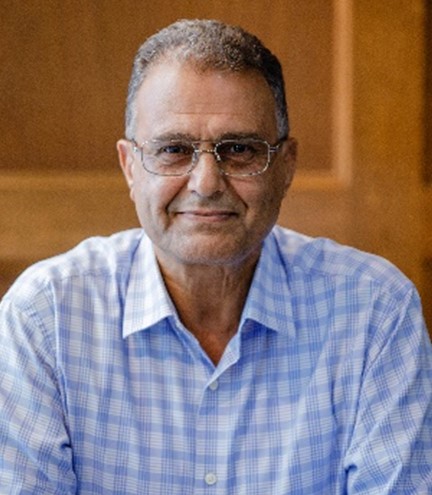
Prof. Amin Abbosh
Professor and Director of Centre for Electromagnetic Innovations (ƐMAGIN) at The University of Queensland (UQ), Australia. He is currently a member of the Australian Research Council College of Experts. Previously, Prof Abbosh was the Head of the School of ITEE-UQ, which includes five Departments (Electrical Engineering, Biomedical Engineering, Software Engineering, Data Science & Human Centred Computing). He also served as Director of Research and Director of Research Training at UQ. He has authored more than 500 papers, mainly on Electromagnetic Medical Imaging (EMI). He is the chief inventor of more than 20 patents licensed to the medical industry. His patents form the core IP of a publicly listed Australian company, and a start-up company. For his excellence in fundamental, applied, and translational research, he won many awards, including the IEEE APS King Prize twice (2016 & 2019). UQ Excellence in HDR Supervision (2016) & Entrepreneurship Award (2018), and many best paper awards in premier IEEE conferences. He successfully led a 35-member team in more than 30 projects, including Being the Director of the EMI Cooperative Research Centre, funded by the Australian Research Council and Industry.
The development of smart health technologies intertwined with innovation and entrepreneurship is vital to transforming healthcare delivery to meet society’s ever-evolving needs. That noble aim can only be realized by translating cutting-edge research into clinical practices. Biological tissues have specific dielectric properties, which are frequency dispersive. Any change in the physiological and pathological conditions of those tissues changes those dielectric properties, and thus the response of the affected tissues to electromagnetic (EM) waves transmitted using proper sensors will change. EM imaging (EMI) utilizes that change in response to image, detect and classify relevant pathology. Based on that concept, Prof Abbosh has researched, in the past ten years, and developed EMI as a disruptive medical imaging modality with far-reaching societal impact, applications, from early diagnosis to therapy and monitoring, and commercial opportunities. His dynamic 35-member team has built a series of clinical EMI prototypes for head imaging in stroke detection, torso imaging for pulmonary edema, congestive heart failure, fatty liver disease detection, skin scanner for the detection of melanoma, bloodless blood test, knee imaging, etc. In contrast to traditional tools, EMI is a portable point-of-care device that can be deployed in ambulances, rural clinics, doctor’s offices, hospitals, and medical centers. Moreover, since EMI is non-ionizing and non-invasive, it can be used frequently for real-time monitoring. The journey toward building a clinical EMI modality was not easy. Since human tissues are lossy, while the allowed safe EM power is low, useful imaging signals are embedded in clutter, making it quite challenging to image internal human tissues using EMI. Additionally, the available information is limited due to the limited number of sensors and frequency bands that can be used. To address those challenges, Prof Abbosh developed novel structures supported by a hybrid suite of physics-guided, AI-driven techniques that enable achieving more than 90% overall accuracy of detection and classification in clinical trials. Those results would not have been achieved without building a multidisciplinary team with complementary EM, AI, and Bio-Signal Processing skills, working in a collaborative environment towards one main objective. In this talk, Prof Abbosh will discuss the roller coaster of his research journey with EMI, which followed a path that was rarely traveled. While his journey verified the potential of EMI, it also confirmed the significant associated challenges that should be addressed when aiming to translate research from the bench to innovation and bedside.
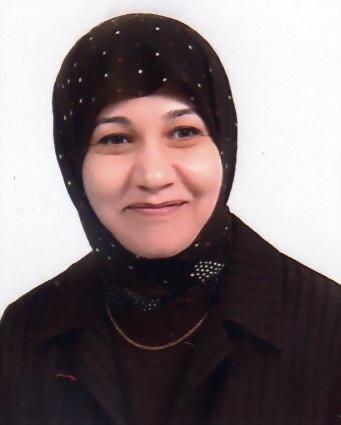
Dr. Muna Dawood Alsallal
Revolutionizing Sustainability: AI's Role in Smart Building
PhD in Machine Learning (Digital Environment) – UK
Postgraduate Diploma (PGDip) in Smart Cities
Diploma in Global Leaders – UK
MSc in Forensic Computing – UK
Affiliation: Assistant Professor in Architecture Dept, Engineering College, Al-Muthanna University
Dr. Muna Alsallal is a dedicated Assistant Professor and AI expert, affiliated with the UK Higher Education Academy and the British Computer Society. Her Ph.D. in AI underpins her contributions to predictive modelling, natural language processing, and computer vision. Dr. Alsallal is known for her ability to synthesize academic insights and industry innovation, advancing the field of machine learning which represents the soul of AI. Dr. Alsallal captivates audiences with her insights, drawing from a wellspring of experience to envision and shape the evolving landscape of her professionalism. Her publications resonate with a global audience, further solidifying her role as an architect of the future in artificial intelligence.This proposal is crafted to convey the significance of AI in sustainable building design with a tone of high regard and professionalism. This presentation advocates for the integration of Artificial Intelligence (AI) in the realm of architecture, emphasizing its transformative influence on sustainable building practices. It delves into the significant role buildings play in shaping our daily lives and the innovative adaptability of smart buildings that cater to our needs, thereby enhancing well-being and operational efficiency. The proposal also underscores the critical impact of AI in optimizing energy consumption and creating environments that are not only comfortable but also intuitively managed. Addressing the challenges associated with the digitization of buildings, it also highlights the opportunities AI presents in retrofitting existing infrastructures towards achieving net-zero goals. In conclusion, this presentation calls for a collaborative effort between architects, and AI experts to ensure that the integration of tradition and innovation leads to functional, aesthetic, and sustainable environment.
Paper Submisssions will be via Conference Management System EDAS: http://edas.info/newPaper.php?c=3086
| Regular Paper Submission | January 10th, 2024 |
| Acceptance Notification | February 1st, 2024 |
| Final Paper Submission | February 28th, 2024 |
| Special Session Proposal | November 1st, 2023 |
| Coneference Date | 22nd to 25th April 2024 |